Compound Interest Calculator

compound interest image

Compound Interest Calculator

Calculate long-term investment growth to maximize returns, build wealth, and plan smarter financial futures.

How Compound Interest Works

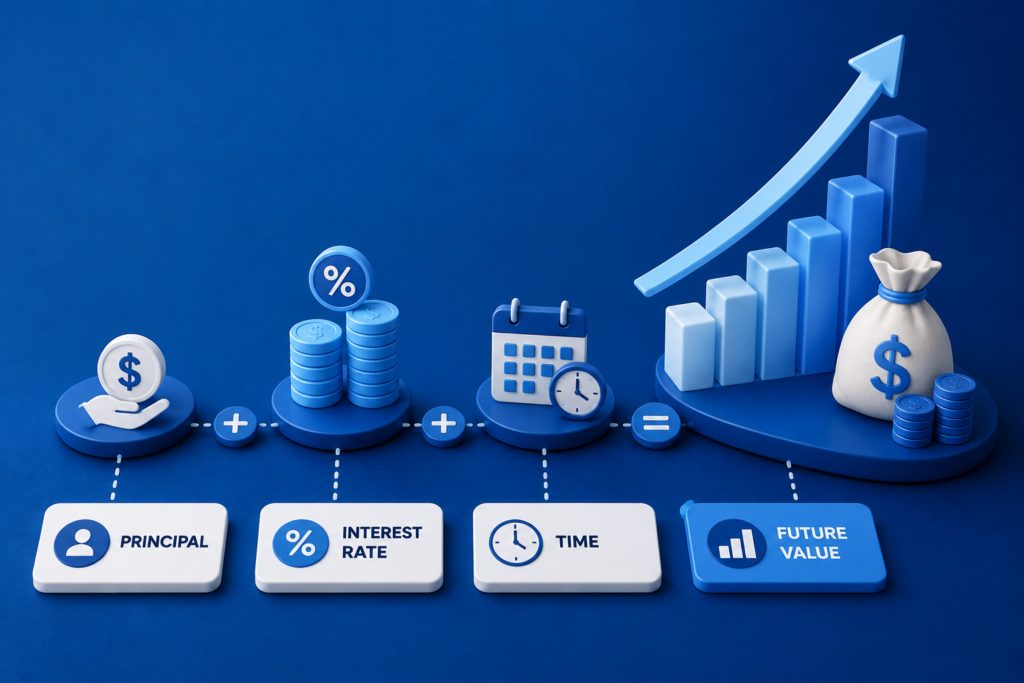
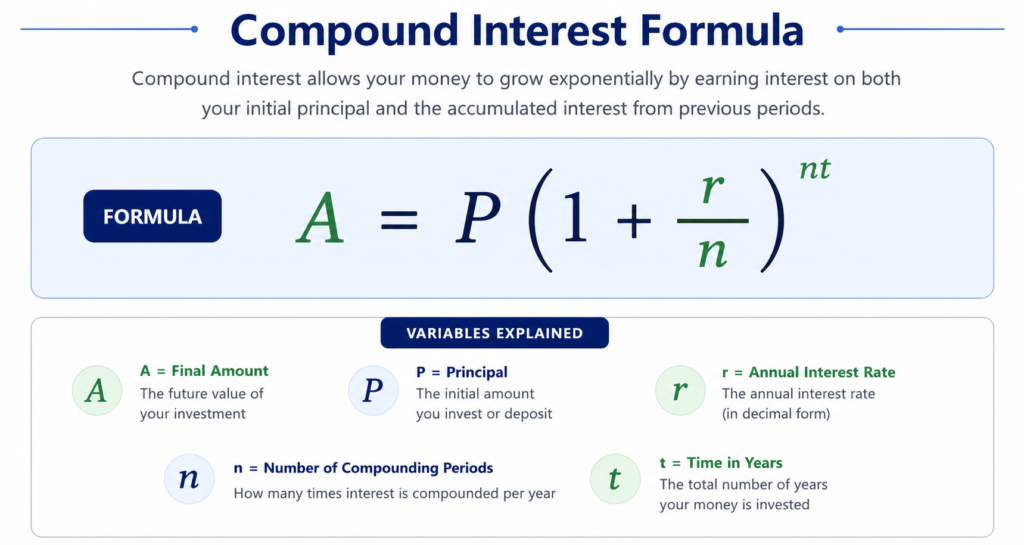
Compound interest allows your money to grow exponentially by earning interest not only on your original principal but also on previously accumulated interest. Over time, this “interest on interest” effect can significantly accelerate savings, investments, retirement funds, or debt growth depending on whether you are earning or paying interest.

compound interest image 2

Accelerates wealth accumulation

Maximizes retirement savings

Enhances investment returns

Encourages disciplined early savings

Demonstrates the power of time

Supports passive income growth

Why Compound Interest Is Essential for Long-Term Financial Growth

Compound Interest vs Simple Interest

Compound Interest

Interest earned on principal + accumulated interest

Simple Interest

Compound interest generates faster long-term growth.

2026 Average Compound Growth Benchmarks

Real Estate Investments
12%
Stock Market Average
10%
Retirement Portfolios
8%
Dividend Portfolios
7%
High-Yield Savings Accounts
5%
Bonds
4%

Disclaimer:  Actual returns vary by market conditions and investment strategy.

7 Strategies to Maximize Compound Interest

1. Start Early
Time is the greatest advantage.

2. Invest Consistently
Regular contributions accelerate growth.

3. Reinvest Earnings
Maximize compounding power.

4. Choose Higher Returns Wisely
Balance growth with risk.

5. Minimize Fees
Reduce investment drag.

6. Increase Contributions Over Time
Boost wealth-building speed.

7. Stay Invested Long-Term
Avoid interrupting compound cycles.

Avoid These Compound Interest Mistakes

Your Compound Interest Frequently Asked Questions

Compound interest is the process of earning interest on both your original principal and the previously accumulated interest over time. This creates exponential growth, making it one of the most powerful tools for building wealth or increasing debt.

The more frequently interest compounds (daily, monthly, quarterly, or annually), the faster your money can grow. Daily or monthly compounding generally produces stronger long-term returns than annual compounding.

Yes, compound interest typically generates greater long-term growth because interest is earned on accumulated interest, while simple interest only earns on the original principal.

The growth potential depends on:

  • Initial investment amount
  • Interest rate
  • Compounding frequency
  • Time invested
  • Ongoing contributions

The longer you stay invested, the more powerful compound growth becomes.

Yes. Compound interest can work against you with debts such as credit cards, loans, or unpaid balances, causing debt to grow rapidly if not managed properly.

Common compound growth investments include:

  • Savings accounts
  • High-yield savings
  • Retirement accounts
  • Mutual funds
  • ETFs
  • Dividend reinvestment plans
  • Bonds
  • Stock portfolios

You can maximize compound growth by:

  • Starting early
  • Investing consistently
  • Reinvesting earnings
  • Increasing contributions
  • Choosing higher-yield investments responsibly
  • Minimizing fees
  • Staying invested long-term

Book Financial Strategy Session

Get expert support and clarity, without the stress.