
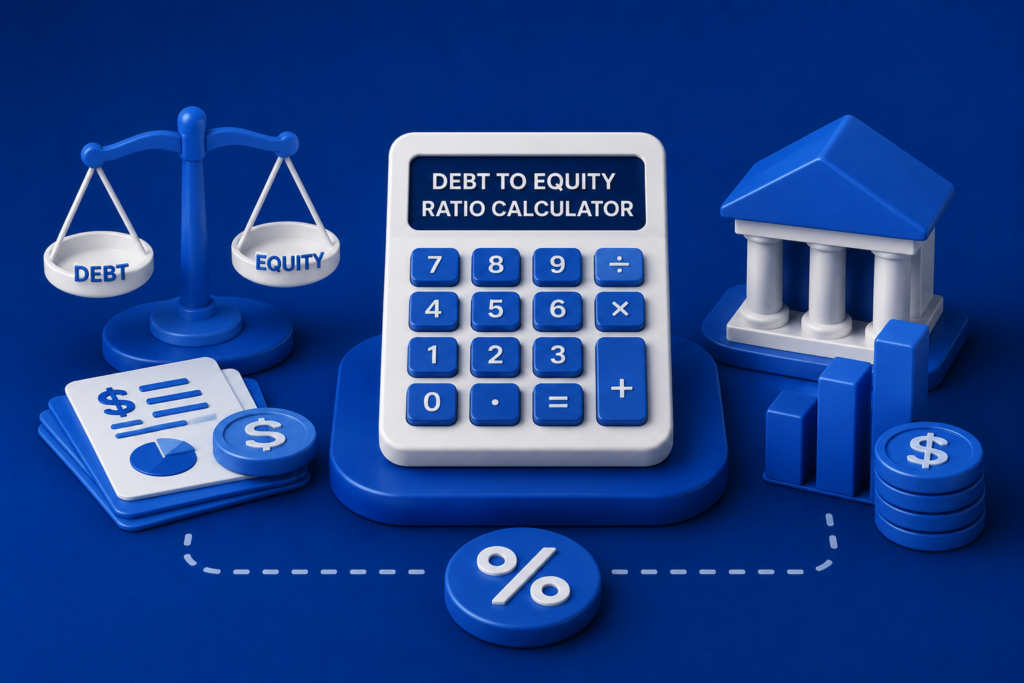
Debt to Equity Ratio Calculator
Quickly calculate your debt-to-equity ratio to evaluate your company’s financial leverage, stability, and overall financial health.
Calculate Your Debt to Equity Ratio
Enter your company’s current debt and shareholders’ equity, then add a proposed scenario to compare how changes in financing may affect your debt-to-equity ratio and overall capital structure.
Important: This calculator provides a general estimate for educational and planning purposes. An appropriate debt-to-equity ratio varies considerably by industry, business model, growth stage, cash flow and financing terms
Inputs
What Is a Debt-to-Equity Ratio?
The debt-to-equity ratio is a financial leverage ratio that compares a company’s total debt with its shareholders’ equity. It helps business owners, lenders and investors understand how much of the company is financed through borrowing compared with owner or shareholder investment.
A higher ratio indicates that the business relies more heavily on debt financing. A lower ratio generally indicates that a greater portion of the business is financed through equity.
Why This Ratio Matters
- Measures financial leverage
- Helps assess borrowing risk
- Supports financing decisions
- Helps compare capital structures
- Provides insight for lenders and investors
- Supports financial forecasting
What Is the Debt-to-Equity Ratio?
Debt-to-Equity Ratio Formula
Formula
Debt-to-Equity Ratio =
Total Debt ÷ Total Shareholders’ Equity
Example
Total Debt: $150,000
Shareholders’ Equity: $100,000
$150,000 ÷ $100,000 = 1.50
Debt-to-Equity Ratio = 1.50:1
Explanation
A ratio of 1.50 means the company has approximately $1.50 of debt for every $1.00 of shareholders’ equity.
What Information Do You Need?
Total Debt
Include interest-bearing business obligations such as bank loans, lines of credit, equipment loans, shareholder loans and other financing liabilities.
Shareholders Equity
Use the shareholders’ equity balance shown on the company’s balance sheet, including share capital, retained earnings and other applicable equity accounts.
Current Financial Position
Enter the company’s existing debt and equity balances to calculate its present debt-to-equity ratio.
Proposed Scenario
Enter projected debt and equity balances to assess how new borrowing, debt repayment or additional shareholder investment may affect financial leverage.
General Interpretation of Debt-to-Equity Ratios
Below 0.50
Lower financial leverage
The business uses relatively less debt compared with shareholders’ equity. This can indicate lower financing risk, although it may also mean the business is using less external capital to fund growth.
0.50 to 1.00
Moderate financial leverage
Debt remains at or below the level of shareholders’ equity. This may represent a relatively balanced financing structure for some businesses.
1.00 to 2.00
Elevated financial leverage
The company has more debt than shareholders’ equity. Cash flow, interest costs, repayment requirements and industry norms should be reviewed carefully.
Above 2.00
Higher financial leverage
Debt is significantly greater than shareholders’ equity. The company may face increased financing risk, particularly if cash flow is inconsistent or interest obligations are high.
Note:
These ranges are general illustrations only. Capital-intensive industries may normally operate with higher leverage than professional services, consulting or technology businesses.
Compare Your Current and Proposed Capital Structure
The calculator allows you to compare your current financial structure with a proposed scenario. This can help you assess the effect of additional borrowing, debt repayment or new shareholder investment before making a major financial decision.
Additional Borrowing
See how taking on a new business loan or line of credit may increase your company’s debt-to-equity ratio.
Debt Repayment
Measure how reducing outstanding debt may strengthen the company’s balance sheet and lower financial leverage.
New Equity Investment
Determine how an additional owner or shareholder investment may reduce the ratio and improve the equity position.
Debt-to-Equity Ratio Example
Current Position
Financial item
Total debt
Shareholders’ equity
Debt-to-equity ratio
Debt share of capital
Equity share of capital
Amount
$150,000
$100,000
1.50:1
60%
40%
Proposed Scenario
Assume the business repays $50,000 of debt:
Financial item
Total debt
Shareholders’ equity
Debt-to-equity ratio
Debt share of capital
Equity share of capital
Amount
$100,000
$100,000
1.00:1
50%
50%
In this example, repaying $50,000 of debt reduces the debt-to-equity ratio from 1.50 to 1.00. This means the business moves from having $1.50 of debt per $1.00 of equity to an equal balance of debt and equity.
What Can Affect the Ratio?
Business Loans
New borrowing generally increases debt and may raise the ratio.
Debt Repayment
Paying down loans generally decreases debt and lowers the ratio.
Business Losses
Losses can reduce retained earnings and shareholders’ equity, which may increase the ratio.
Retained Profits
Keeping profits in the company can increase retained earnings and strengthen shareholders’ equity.
Shareholder Investment
Additional share capital or owner investment may increase equity and lower the ratio.
Dividends and Withdrawals
Dividends or other equity reductions can lower shareholders’ equity and increase the ratio.
Why Banks and Lenders Monitor Financial Leverage
Lenders commonly review debt-to-equity alongside cash flow, profitability, debt-service coverage and available security. The ratio helps them assess how much financial risk is being carried by creditors compared with shareholders.
- Ability to support additional borrowing
- Existing level of financial leverage
- Strength of the balance sheet
- Capacity to absorb future losses
- Dependence on external financing
- Overall financing risk
A low ratio does not automatically guarantee financing approval, and a high ratio does not automatically mean a business is financially unhealthy. The complete financial position must be reviewed.
Why Use RK4 Accountants?
Make Better Financing Decisions With Clear Financial Information
The debt-to-equity ratio is only one part of your company’s financial story. RK4 Accountants can help you understand your balance sheet, evaluate financing options and determine how borrowing decisions may affect your cash flow and long-term financial position.
- Financial statement analysis
- Balance sheet review
- Cash-flow forecasting
- Budget preparation
- Financing scenario analysis
- Fractional CFO support
- Management reporting
- Lender-ready financial information
Frequently Asked Questions
What is considered a good debt-to-equity ratio?
There is no single ratio that is ideal for every company. A suitable ratio depends on the industry, business model, cash-flow stability, growth stage and financing requirements.
Is a lower debt-to-equity ratio always better?
Not necessarily. A lower ratio generally means less reliance on debt, but reasonable borrowing may help a business invest, expand and generate higher returns.
Can a debt-to-equity ratio be negative?
Yes. A negative ratio can occur when shareholders’ equity is negative, often because accumulated losses exceed the company’s contributed capital and retained profits. A standard positive ratio interpretation may not be meaningful in that situation.
Where do I find total debt?
Total debt is usually identified from the liabilities section of the balance sheet. Depending on the intended analysis, this may include short-term and long-term interest-bearing debt.
Where do I find shareholders’ equity?
Shareholders’ equity appears on the balance sheet and commonly includes share capital, retained earnings and accumulated other equity balances.
Is total debt the same as total liabilities?
Not always. Total liabilities can include operating liabilities such as accounts payable and accrued expenses. Some debt-to-equity calculations use interest-bearing debt, while others use total liabilities. The calculation method should remain consistent when comparing periods or companies.
Why does my ratio change when the company reports a loss?
Business losses reduce retained earnings and therefore reduce shareholders’ equity. When equity falls, the debt-to-equity ratio can increase even when total debt remains unchanged.
Do banks use the debt-to-equity ratio?
Many lenders consider it, but they usually review it alongside profitability, cash flow, debt-service coverage, collateral and the company’s credit history.
Related Business Calculators
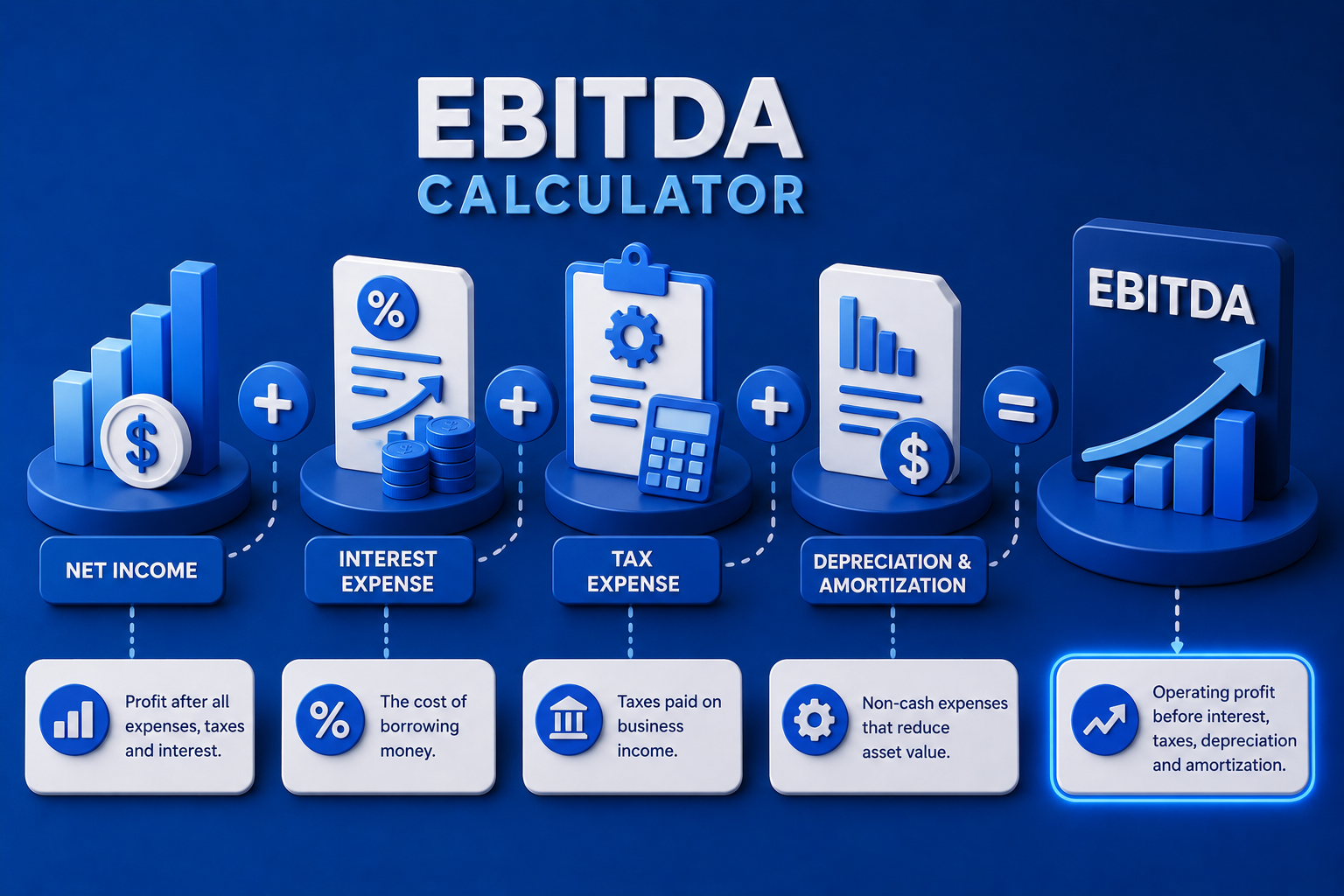
EBITDA Calculator
Calculate EBITDA quickly to evaluate operational performance, improve financial strategy, and measure true business profitability.
Canadian Income Tax Calculator
Estimate tax obligations accurately to maximize deductions, reduce liabilities, and improve financial planning.
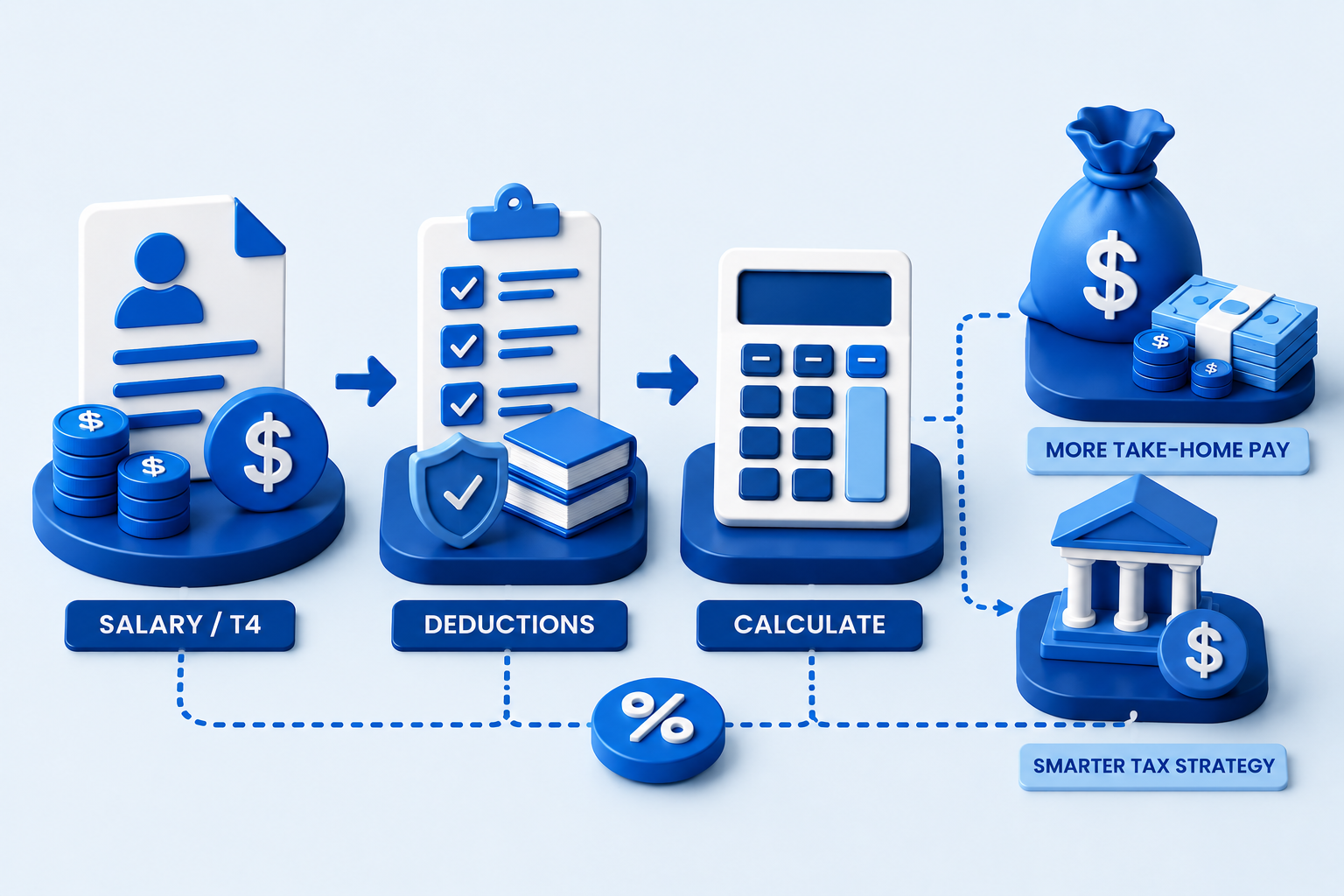
Salary vs. Dividend Calculator
See how much money you could keep in your pocket. Compare salary, dividend, and self-employed income strategies to identify the most tax-efficient option for your situation.
Planning to Borrow, Refinance or Invest in Your Business?
Before changing your company’s financing structure, understand how the decision may affect leverage, cash flow and financial risk. RK4 Accountants can help you evaluate the numbers and prepare a clear financial plan.
