
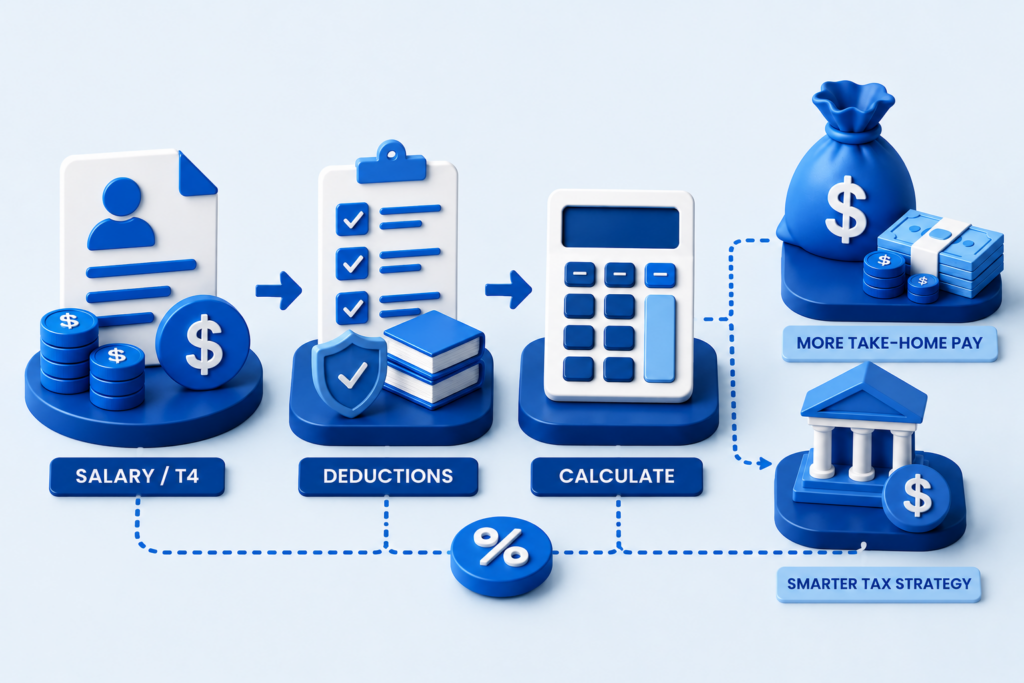
Salary vs. Dividend Calculator
See how much money you could keep in your pocket. Compare salary, dividend, and self-employed income strategies to identify the most tax-efficient option for your situation.
Why Compare Salary vs Dividends?
Personal tax liability
CPP contributions
Corporate taxes
Retirement planning
Cash flow
RRSP contribution room
Our calculator helps Canadian business owners and self-employed professionals compare compensation strategies and estimate after-tax income instantly.
Use the calculator below to compare:
- Salary (T4)
- Dividends (T5)
- Sole Proprietor / Self-Employed Income
- Provincial tax differences
- Estimated net take-home income
Compare Your Compensation Options
How the Calculator Works
Step 1
Enter Your Income
Step 2
Select Your Business Structure
Step 3
Compare Your Results
RK4 Salary vs Dividend Calculator
Compare incorporated owner compensation or sole proprietor/self-employed income.
Results
Enter income and click Calculate to view results.
Salary / T4
Dividend / T5
Sole Proprietor / Self-Employed
Note: Many incorporated owner-managers are exempt from EI because their employment may not be considered insurable under CRA rules. For this reason, EI premiums are not included in the salary calculations unless specifically applicable..
Important: Results are estimates only and are based on simplified tax assumptions. Actual tax liabilities and compensation strategies may vary depending on your personal circumstances, business structure, available deductions, credits, and applicable tax legislation. For personalized tax planning advice, please consult an RK4 advisor.
Salary vs Dividend: What's the Difference?
Salary (T4)
- Creates RRSP room
- CPP contributions required
- Tax deductible to corporation
- Consistent employment income
- Can improve borrowing qualification
Dividend (T5)
- Does not create RRSP room
- No CPP contributions
- Paid from after-tax corporate income
- Flexible compensation strategy
- Often increases short-term cash flow
Important Note:
There is no universal “best” option. The most effective compensation strategy depends on your income level, province, retirement goals, and business structure.
Sole Proprietor vs Incorporated Business
Sole Proprietor
- Simpler administration
- No corporate tax return
- Tax deductible to corporation
- No dividends available
Incorporated Business
- Potential tax deferral opportunities
- Salary and dividend flexibility
- Corporate tax planning advantages
- Increased compliance requirements
This Calculator is Desinged for:
Business Owners
Determine the most tax-efficient way to pay yourself.
Healthcare Professionals
Doctors, dentists, chiropractors, physiotherapists, psychologists, and other regulated professionals.
Consultants
Compare incorporated versus self-employed compensation.
Self-Employed Individuals
Estimate personal tax and CPP obligations.
Sole Proprietor/Incorporated & Salary vs Dividend FAQ's
Is salary or dividend better?
The answer depends on your income level, corporate structure, CPP preferences, RRSP goals, and tax planning strategy.
Do dividends create RRSP room?
No. Only earned income such as salary creates RRSP contribution room.
Do dividends require CPP contributions?
No. Dividends are not pensionable earnings and do not trigger CPP contributions.
What are CPP and EI deductions?
CPP (Canada Pension Plan) and EI (Employment Insurance) are mandatory payroll contributions deducted from employment income. Quebec residents typically pay QPP (Quebec Pension Plan) and may also pay QPIP (Quebec Parental Insurance Plan).
Can a sole proprietor pay themselves dividends?
No. Dividends are only available through a corporation.
Is this calculator an exact tax filing estimate?
No. This calculator provides an estimate only and may not account for every tax rule, deduction, surtax, or special circumstance. For precise tax filing or advanced planning, professional accounting advice is recommended.
Is this calculator accurate?
This calculator provides estimates for educational purposes. Consult RK4 Accountants for personalized tax planning.
Related Business Calculators
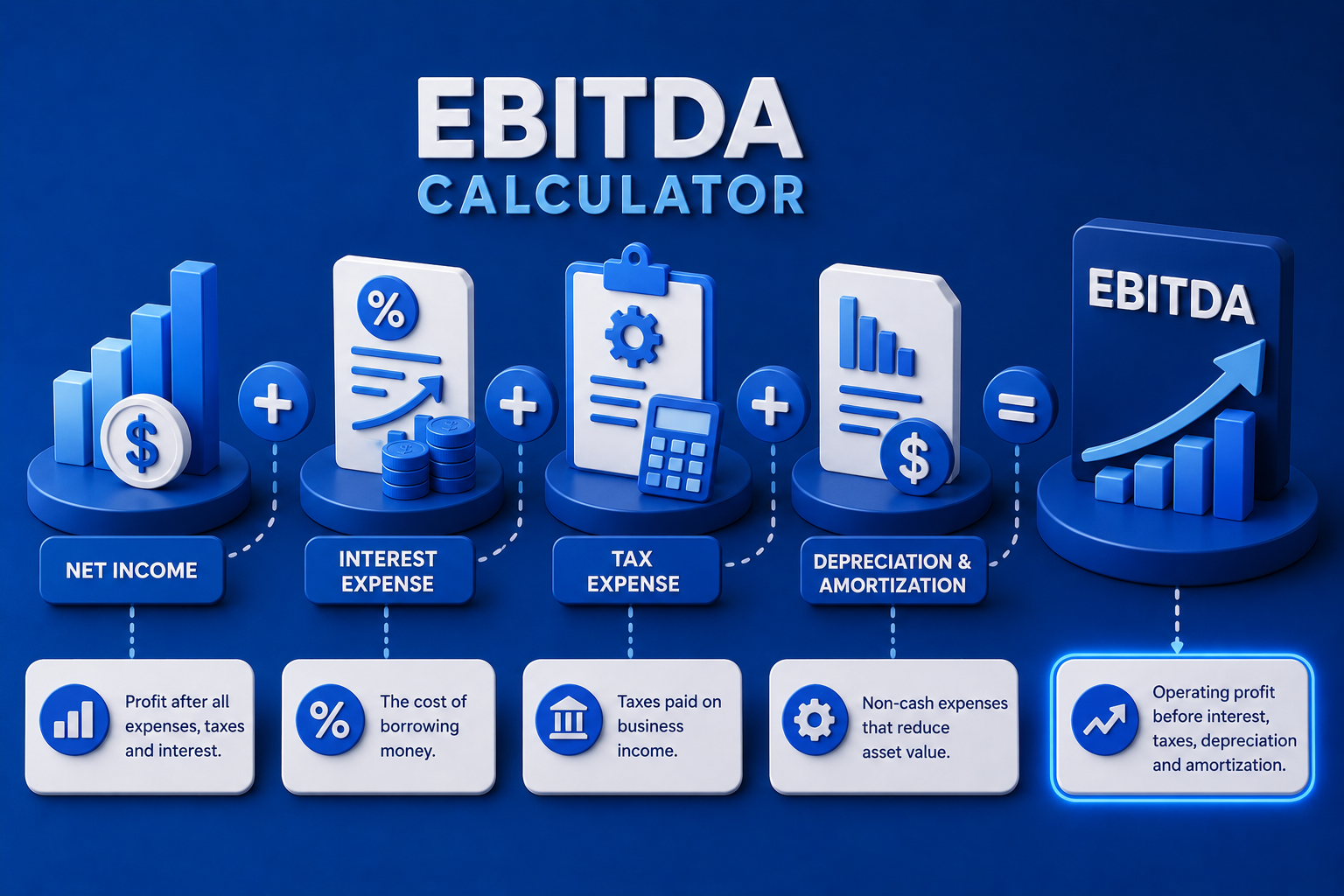
EBITDA Calculator
Calculate EBITDA quickly to evaluate operational performance, improve financial strategy, and measure true business profitability.
Canadian Income Tax Calculator
Estimate tax obligations accurately to maximize deductions, reduce liabilities, and improve financial planning.

Profit Margin Calculator
Instantly calculate gross, operating, and net profit margins to optimize pricing, improve profitability, and grow smarter.
Want Personalized Tax Planning Advice?
Our advisors can help determine the optimal compensation strategies
